

"Cable trays, also known as cable tray systems or cable management systems, are structural devices used to support and protect cables. They are commonly used in commercial and industrial buildings for wiring and cable management. The primary function of a cable tray is to provide a safe, organized, and manageable pathway for cables."
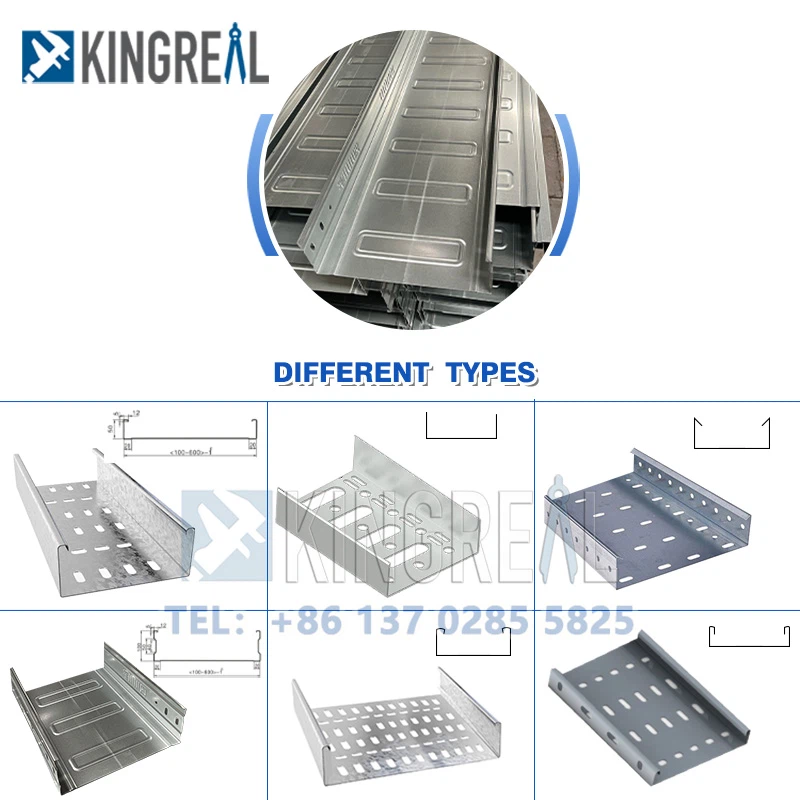
Common Types of Cable Trays
Tray Cable Tray
The tray cable tray is a common type of cable tray known for its simple structure, easy installation, and strong load-bearing capacity. It is suitable for laying power, communication, and signal cables. The tray is usually made of fiberglass or aluminum alloy, offering corrosion resistance and antistatic properties. Additionally, partitions, brackets, and other accessories can be added as needed to enhance the load-bearing capacity of the tray cable tray.
Channel Cable Tray
The channel cable tray is a fully enclosed type of cable tray that offers a high level of protection and load-bearing capacity. It is suitable for hazardous environments such as flammable and explosive areas. Made of fiberglass or aluminum alloy, the channel cable tray is lightweight, easy to install, and visually appealing. It effectively shields cables from external environmental interference.
Ladder Cable Tray
The ladder cable tray provides excellent ventilation, making it suitable for large-span cable installations with higher load requirements. Typically made of galvanized steel, the ladder cable tray is aesthetically pleasing and easy to install. Additional accessories such as protective plates and brackets can be added to further improve its load-bearing capacity.


What is the manufacturing process of cable trays?
The manufacturing process of cable trays involves the use of metal raw materials, which are cold-formed into shape by a Cable Tray Roll Forming Machine. This process includes several key steps:
- Uncoiling: Metal coils are placed on an uncoiling machine, where they are uncoiled and fed into the production line.
- Leveling: The uncoiled metal strips are then leveled using a leveling machine to eliminate internal stresses and ensure flatness.
- Punching: Pre-set holes are punched into the metal strips using a punching machine, facilitating subsequent installation and fixation.
- Roll Forming: The metal strips are gradually bent into the cross-sectional shape of the cable tray using a roll forming machine. This step defines the structure and strength of the cable tray.
- Cutting: The formed metal strips are cut into specific lengths of cable trays using a cutting machine.
These steps ensure the production of high-quality cable trays, including ladder cable trays, solid bottom cable trays, and perforated cable trays, meeting the requirements for various industrial and commercial applications.

Characteristics of Cable Trays
Simple Structure and Easy Installation: Regardless of the type of cable tray, they all adopt a modular design with a simple and clear structure, making installation convenient and quick. During on-site installation, simply follow the corresponding instructions for assembly, significantly reducing installation difficulty and time costs.
Strong Load-Bearing Capacity: Different types of cable trays have specific load-bearing capacities to meet various requirements. For instance, solid bottom cable trays and perforated cable trays have strong load-bearing capacities, suitable for laying power and communication lines. Ladder cable trays are ideal for large-span, high-load cable installations. Modular cable trays can be customized according to different site requirements to meet diverse application needs.
High Safety: As a support structure, the safety of cable trays is a primary consideration. During the design and manufacturing processes, all types of cable trays use high-strength materials and advanced processing techniques to ensure high safety performance. Additionally, during installation and use, it is important to avoid excessive force or deformation to prevent safety accidents.
Strong Adaptability: Various types of cable trays have excellent adaptability to meet different site requirements. For example, solid bottom cable trays and perforated cable trays are suitable for indoor applications, while ladder cable trays are suited for outdoor applications. Modular cable trays can be customized according to different site requirements to meet diverse application needs.
"As a professional manufacturer of cable tray molding machines, KINGREAL ROLLER can provide customers with professional technical guidance and insights, if there is anything else you would like to know, do not hesitate to contact us immediately!"