

When it comes to interior design and construction, the ceiling is an often-overlooked component that can significantly impact the aesthetics and functionality of a room. One of the critical elements in ceiling construction, particularly for drop ceilings, is the T-bar or T-grid system. In this article, we will explore what T-bars are, their applications, and the essential roles of the main tee and cross tee in ceiling installation.
Understanding the role of the main tee in ceiling systems is essential for anyone involved in construction or interior design. The main tee, along with the cross tee, forms the backbone of a suspended ceiling, providing the necessary support, alignment, and flexibility to create functional and aesthetically pleasing spaces. By incorporating key elements like load-bearing capacity, design flexibility, and ease of maintenance, the main tee ensures that ceiling installations meet the highest standards of quality and performance.

Whether you're working on a residential, commercial, or industrial project, knowing how to effectively utilize T-bars, main tees, and cross tees can make a significant difference in the outcome. These components not only enhance the structural integrity and appearance of ceilings but also contribute to the overall efficiency and functionality of the built environment.
1. What is a T-Bar and Where is it Used?
A T-bar, also known as a T-grid or ceiling carrier profile, is a metal framework used to support ceiling tiles or panels,which is manufacturing by Ceiling T Bar Roll Forming Machine. The shape of the T-bar resembles the letter "T," which provides structural integrity and support for the ceiling system. These T-bars are commonly made from steel or aluminum, ensuring durability and strength.
T-bar systems are frequently used in basements and home theaters to create a clean, professional look while allowing easy access to plumbing and wiring.In offices, retail stores, and hospitals, T-bar ceilings are used for their aesthetic appeal and practical benefits, such as soundproofing and fire resistance. Warehouses and factories use T-bar systems to support ceiling tiles that conceal duct-work, electrical systems, and other utilities.

2. The Role of T-Bars in Ceiling Decoration
"T-bars play a crucial role in the installation and functionality of suspended ceilings. Here are some of their primary functions"
Structural Support
T-bars provide the necessary framework to hold ceiling tiles in place, ensuring they are secure and evenly spaced. This structural support is vital for both safety and aesthetics.
Accessibility
One of the significant advantages of using a T-bar system is the ease of access to the ceiling space. Maintenance of electrical wiring, HVAC systems, and plumbing becomes much simpler with a drop ceiling system, as individual tiles can be removed and replaced without disrupting the entire ceiling.
Aesthetic Enhancement
T-bars contribute to the overall appearance of the ceiling by creating clean lines and smooth surfaces. They can be painted or finished in various colors to match the interior décor, providing a sleek and modern look.
Soundproofing and Insulation
Ceiling tiles supported by T-bars can have soundproofing and insulating properties, enhancing the acoustic environment and energy efficiency of the room.
3. Positioning Functions of Main Tee and Cross Tee
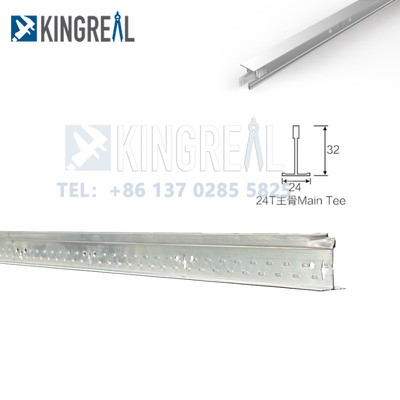
Main Tee
Positioning: The main tee runs the length of the ceiling, usually parallel to the longest dimension of the room. It forms the primary structural support for the ceiling system.
Function: Main tees provide the horizontal backbone of the T-bar grid, supporting the weight of the ceiling tiles and distributing it evenly across the framework. They are typically the first components installed, setting the foundation for the entire ceiling system.
Cross Tee
Positioning: Cross tees intersect the main tees at right angles, creating a grid pattern. They are usually shorter than the main tees and are spaced at regular intervals to support the edges of the ceiling tiles.
Function: Cross tees provide additional support and stability, ensuring that the ceiling tiles remain securely in place. They also help in aligning the tiles, maintaining a uniform and professional appearance.

4. The Role of Main Tees in Ceiling Systems

The main tees are the critical components in a suspended ceiling system, and their roles extend beyond mere support. Here's how they contribute to the overall effectiveness and efficiency of ceiling installations
Load-Bearing Capacity
Main tees are designed to bear the load of the ceiling tiles, light fixtures, and other ceiling-mounted components. Their robust construction ensures that the ceiling remains stable and secure, even under significant weight.
Alignment and Uniformity
Main tees help in maintaining the alignment of the entire grid system. By providing a straight and level foundation, they ensure that all cross tees and ceiling tiles fit perfectly, resulting in a neat and professional finish.
Flexibility in Design
The use of main tees allows for flexibility in ceiling design. They can be adjusted to accommodate various tile sizes and patterns, enabling customized ceiling layouts that suit specific aesthetic or functional requirements.
Easy Installation and Maintenance
Main tees are relatively easy to install, with pre-punched holes and slots for quick assembly. This feature simplifies the installation process and reduces labor costs. Additionally, the ease of removing and replacing tiles supported by main tees makes maintenance tasks more manageable.
Integration with Building Systems
Main tees facilitate the integration of various building systems, such as lighting, HVAC, and sprinklers. They can support the weight and positioning of these systems, ensuring that they are seamlessly incorporated into the ceiling design.
Durability and Longevity
Main tees are manufactured from high-quality materials, such as galvanized steel or aluminum, which are resistant to corrosion and wear. This durability ensures that the ceiling system remains functional and visually appealing for many years.
"By focusing on these aspects and using high-quality materials, you can achieve a ceiling system that is not only durable and reliable but also aligns with modern architectural and design trends. So, the next time you look up at a perfectly aligned ceiling, remember the crucial role played by the main tee and the entire T-bar system in making that possible."