

The process characteristics of roll forming determine the various advantages of roll forming, which makes the roll forming machine widely used in the production of profiles. Its technological characteristics determine that the investment of roll forming is less, it can be put into production quickly, the output is high, and it can realize highly automated assembly line production.
And the equipment has high stability, high production efficiency and low defective rate. Equipment maintenance is simple and so on. Below, we introduce the roll forming process in the form of pictures, so that everyone can have an intuitive understanding of the forming process.
1. The figure below is a schematic diagram of the roll arrangement of the roll forming machine.

2. Explanation of production flow of roll forming process

3. Transverse bending process in roll forming
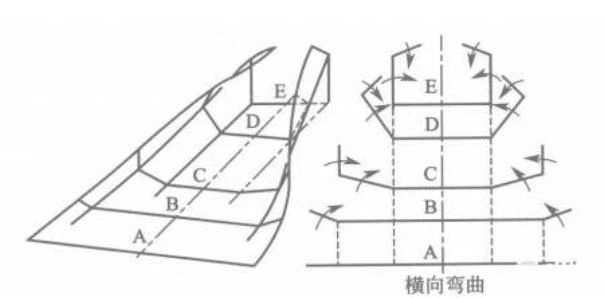
The roll forming process can be classified into transverse bending and redundant deformation according to different deformations
1. Transverse bending process:
The forming of the metal sheet and strip is mainly transverse bending deformation. The metal sheet and strip are formed by transverse bending to achieve the cross-sectional purpose we need, and gradually become the shape we need by rolling with multiple rollers.
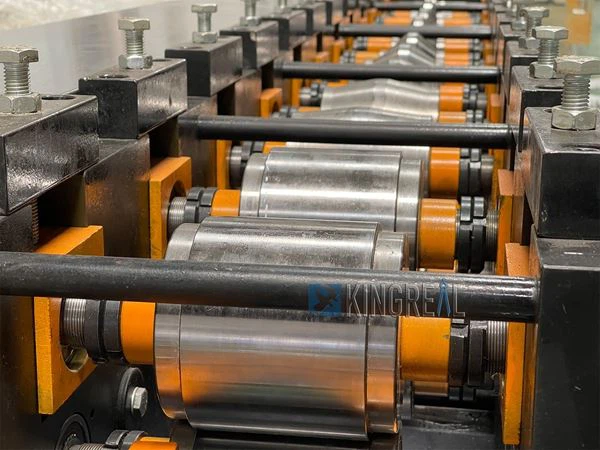
2. Redundant deformation:
In addition to the transverse bending deformation, the metal sheet and strip also have redundant deformation. The excess deformation refers to the formation of pre-cut or coil material when the metal sheet and strip enter the roll forming machine. Complicated three-dimensional shapes are finally developed into products.